Riding Through History: A Four-Day Motorcycle Trip to Hampi
We recently completed a four-day ride from Bengaluru to Hampi, and this was one of those trips where the destination felt completely different from almost anywhere else we had travelled before. Hampi has this strange combination of rocky landscapes, centuries-old ruins, temples, green fields and the Tungabhadra river flowing through all of it. You could be riding on a normal road one moment and suddenly find yourself surrounded by enormous boulders and the remains of an ancient structure the next.
The trip itself didn’t exactly begin according to plan though. Our plan was to leave Bengaluru at 6 AM on the 15th of August. Instead, we went for a movie the previous night, slept at around 1:30 AM and somehow woke up at 8 AM. By the time we realised what had happened, our peaceful early-morning departure had disappeared completely. We eventually left at almost 10 AM, which is not exactly the best time to begin a motorcycle trip out of Bengaluru. But once we were finally outside the city, the traffic slowly disappeared, the roads opened up and the trip finally started feeling like a trip.
This was the route we took:
Bengaluru → Tumakuru → Sira → Chitradurga → Hospet → Hampi and back via the same route
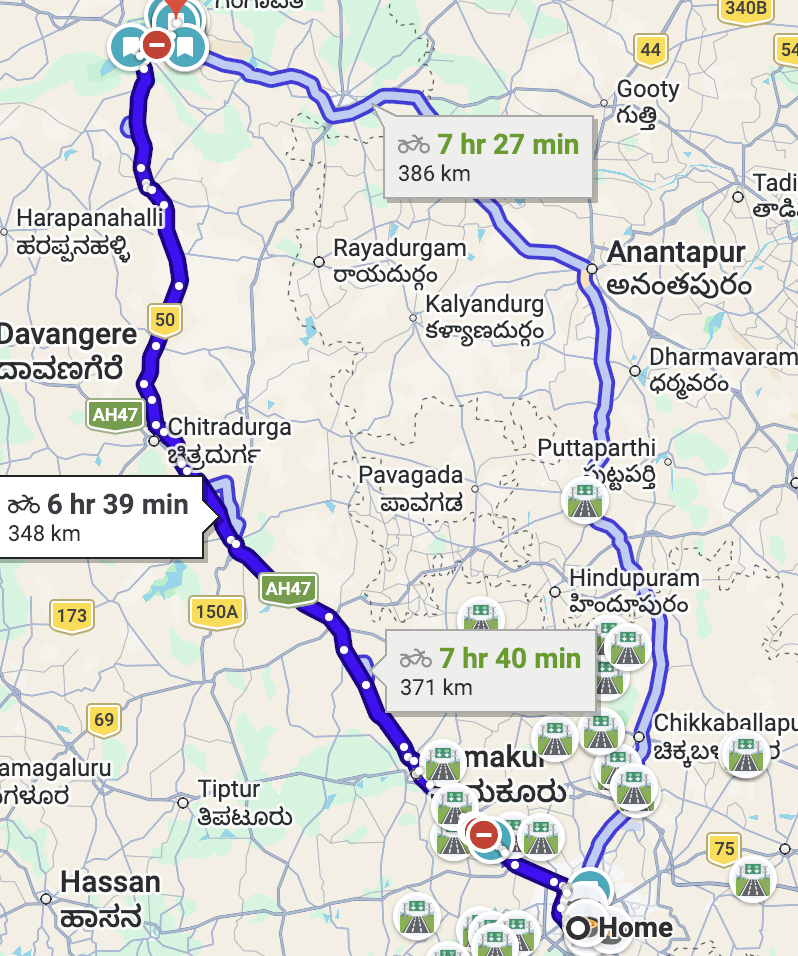
Day 1. Bengaluru to Hospet
The original plan was simple: leave Bengaluru at 6 AM, get outside the city before traffic picked up and have breakfast somewhere along the highway. None of that happened.
We quickly got ready after waking up late, loaded our luggage onto the bike and finally left home at around 10 AM. Getting out of Bengaluru at that time was probably the most tiring part of the entire day’s ride. There was traffic everywhere, along with broken and under-construction sections of road. It took us almost one and a half hours just to properly get out of the city, and by then it already felt like we had been riding for much longer.
We finally stopped for breakfast at around 11:30 AM. There weren’t many options available by the time we reached the restaurant. I think it was mostly just idli and upma, so we ate whatever was available, took a small break and got back onto the road. After riding for another hour and a half or so, we stopped at A2B near Sira at around 1:30 PM.
Once we crossed this stretch, the ride became much more enjoyable. The landscapes slowly started changing and we began seeing huge sunflower fields along the road. There were also windmills scattered across the landscape, and with the open roads and fields around us, some parts of this route were genuinely beautiful. We took a couple of tiny stops along the way just to click pictures.
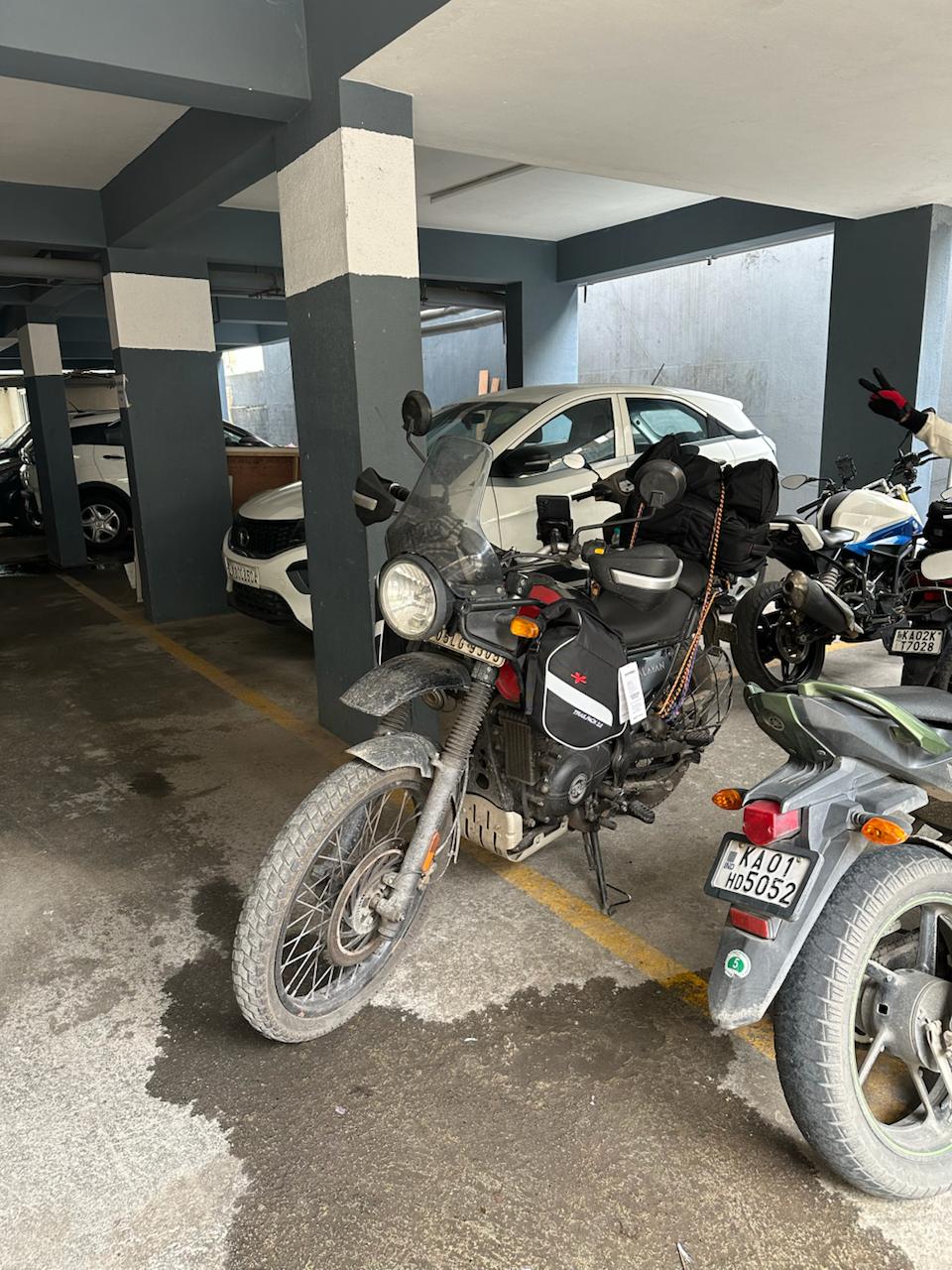
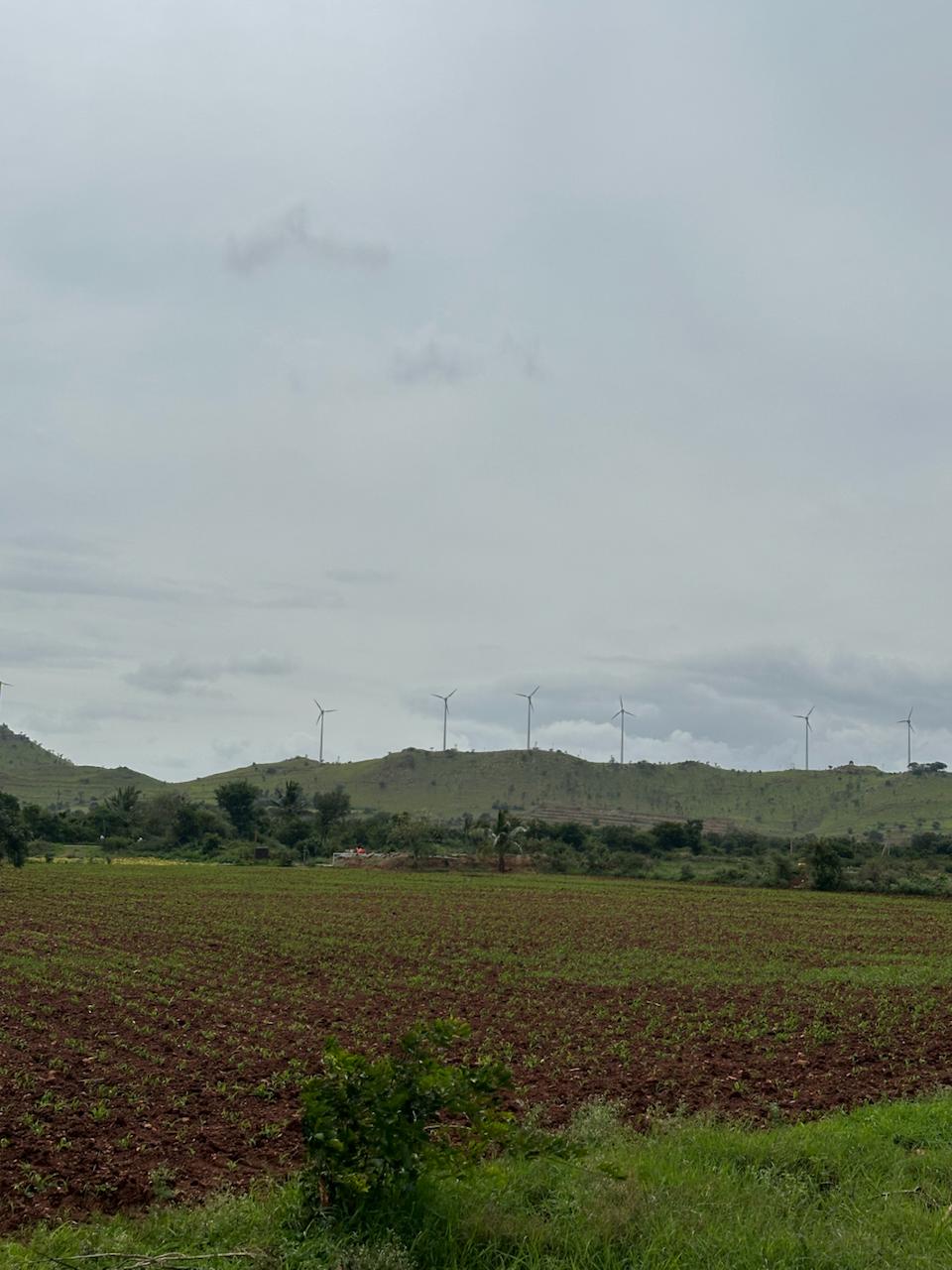
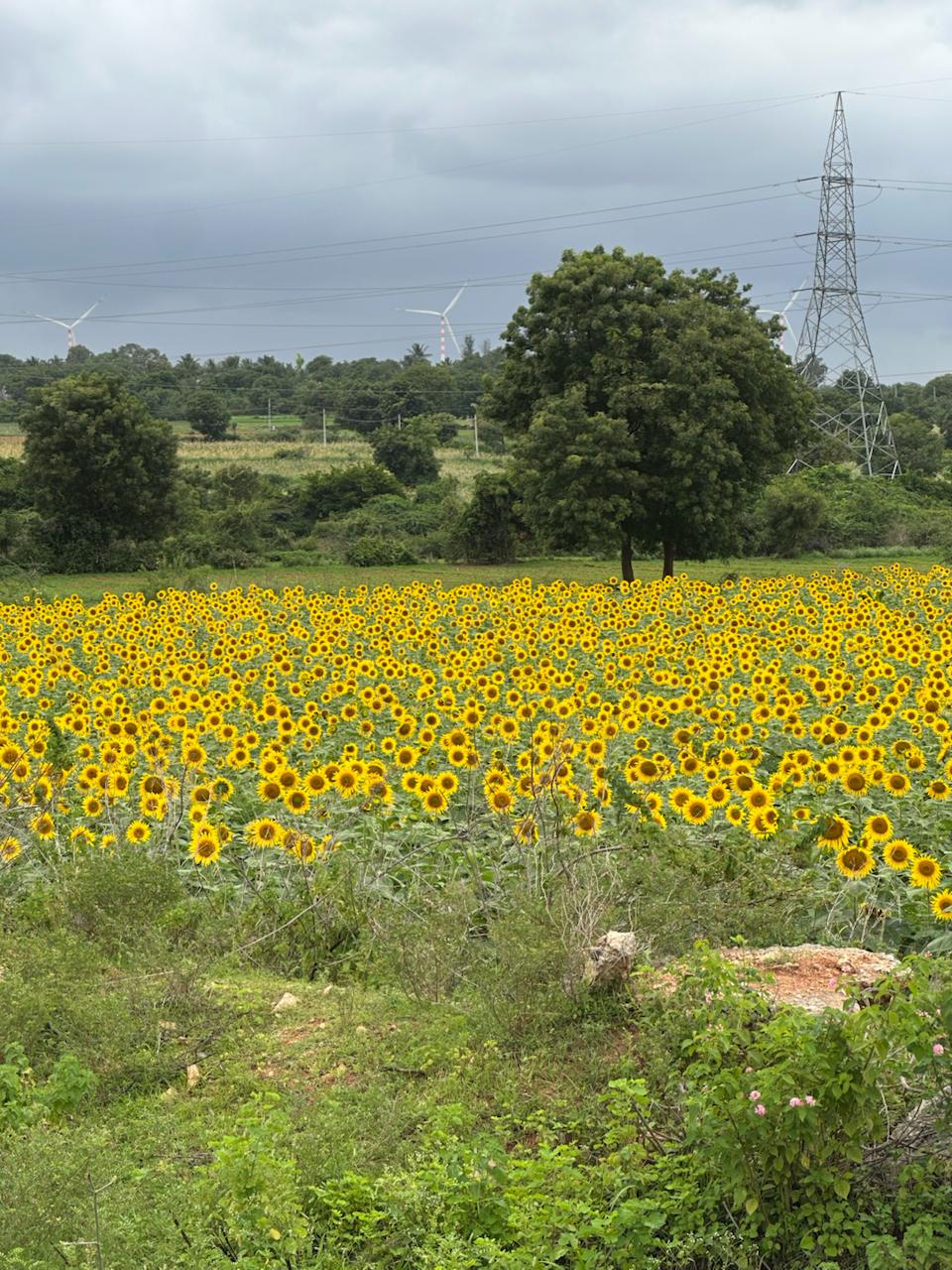
At around 3:45 PM, with roughly 97 kilometres remaining to Hospet, we decided to take another break at a small dhaba a few kilometres after one of the tolls. We ordered some onion rings and tea and just sat there for a while. After spending most of the day riding, these small twenty or thirty minute breaks start feeling surprisingly good. We got back on the bike at around 4:30 PM and continued towards Hospet.
We finally reached our stay at around 5:45 PM. After checking in, freshening up and resting for an hour or two, we ventured out again at around 8 or 9 PM looking for dinner. We weren’t really looking for anything fancy, just a decent pure vegetarian restaurant nearby. We eventually found Kailash Parbat, had dinner there, came back to the stay and crashed for the night.
The first day was pretty much entirely about getting there. Because of our late start, we couldn’t do much after reaching Hospet.
Day 2. Temples, ruins and Tungabhadra Dam
We were determined not to repeat Day 1. We left our stay at around 7:30 AM and headed towards the Virupaksha Temple. It took us roughly half an hour to reach there, and arriving early turned out to be a great decision because the entire area was still surprisingly empty.
Before entering the Virupaksha Temple, we decided to explore the ruins towards the right side and walk towards the Sri Achyutaraya Swamy Temple. There is no direct road access all the way to the temple after parking your vehicle, so expect quite a bit of walking. It probably took us around 20 to 30 minutes, but this ended up being one of my favourite parts of Hampi. The path takes you through rocky hills and old temple remains before eventually reaching the Achyutaraya Temple.
The place was almost completely empty. There were probably four to six other people around when we visited. At one point we genuinely wondered whether tourists were even allowed to explore the place because of how deserted it felt. The temple itself is surrounded by Hampi’s massive rocky landscape, and the amount of detail carved into the stone is impressive. With barely anyone around, it was incredibly peaceful.
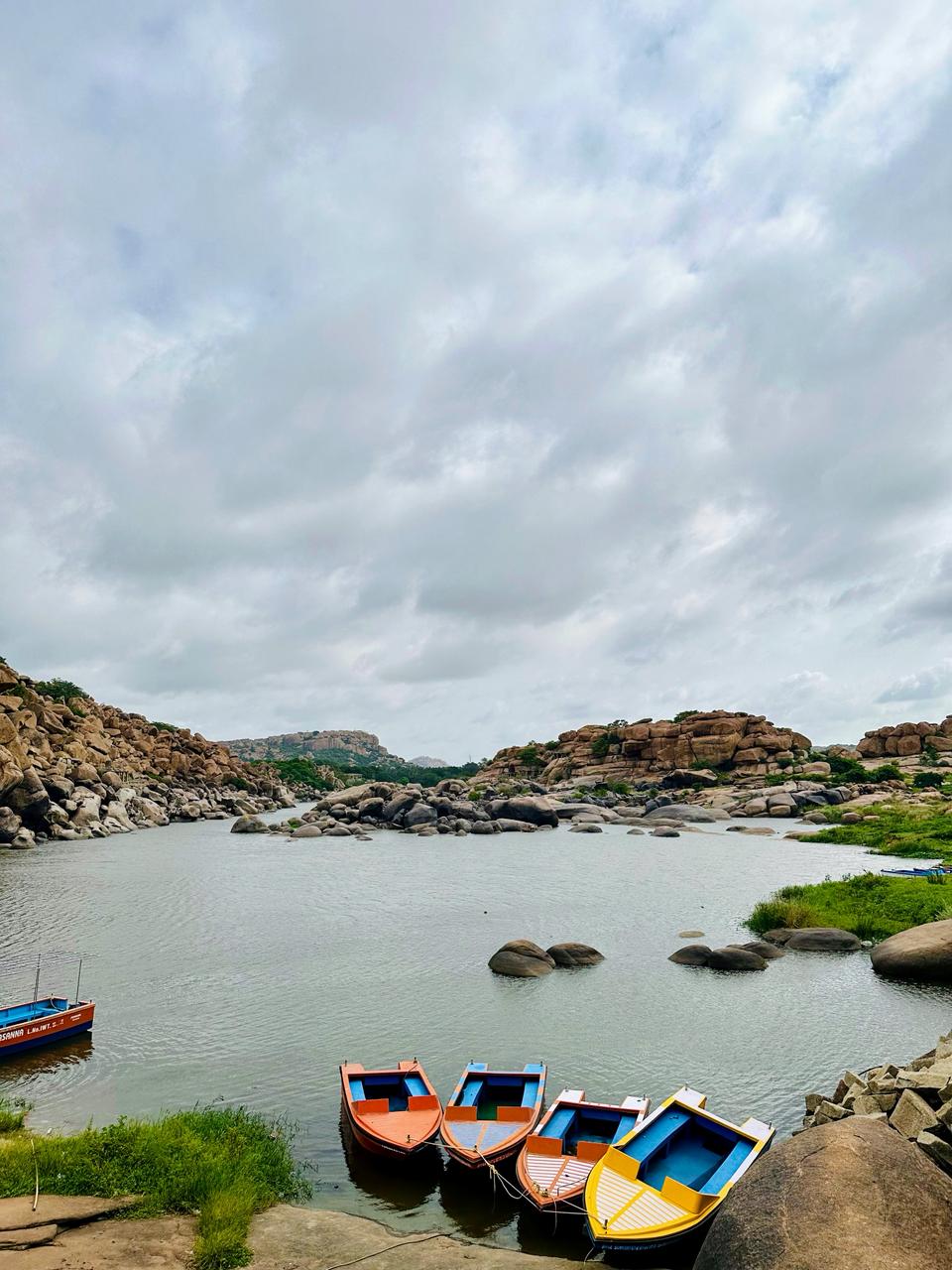
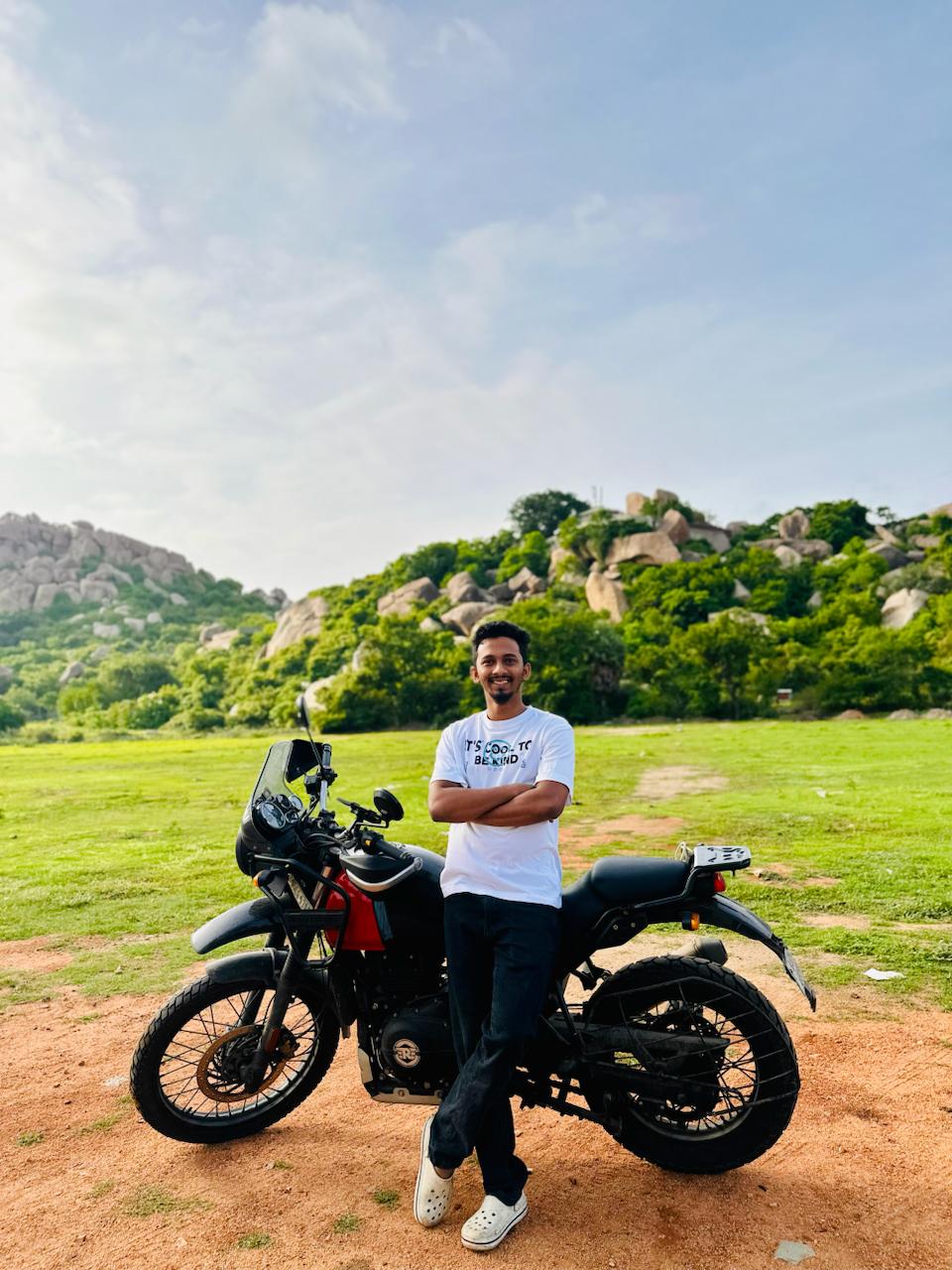
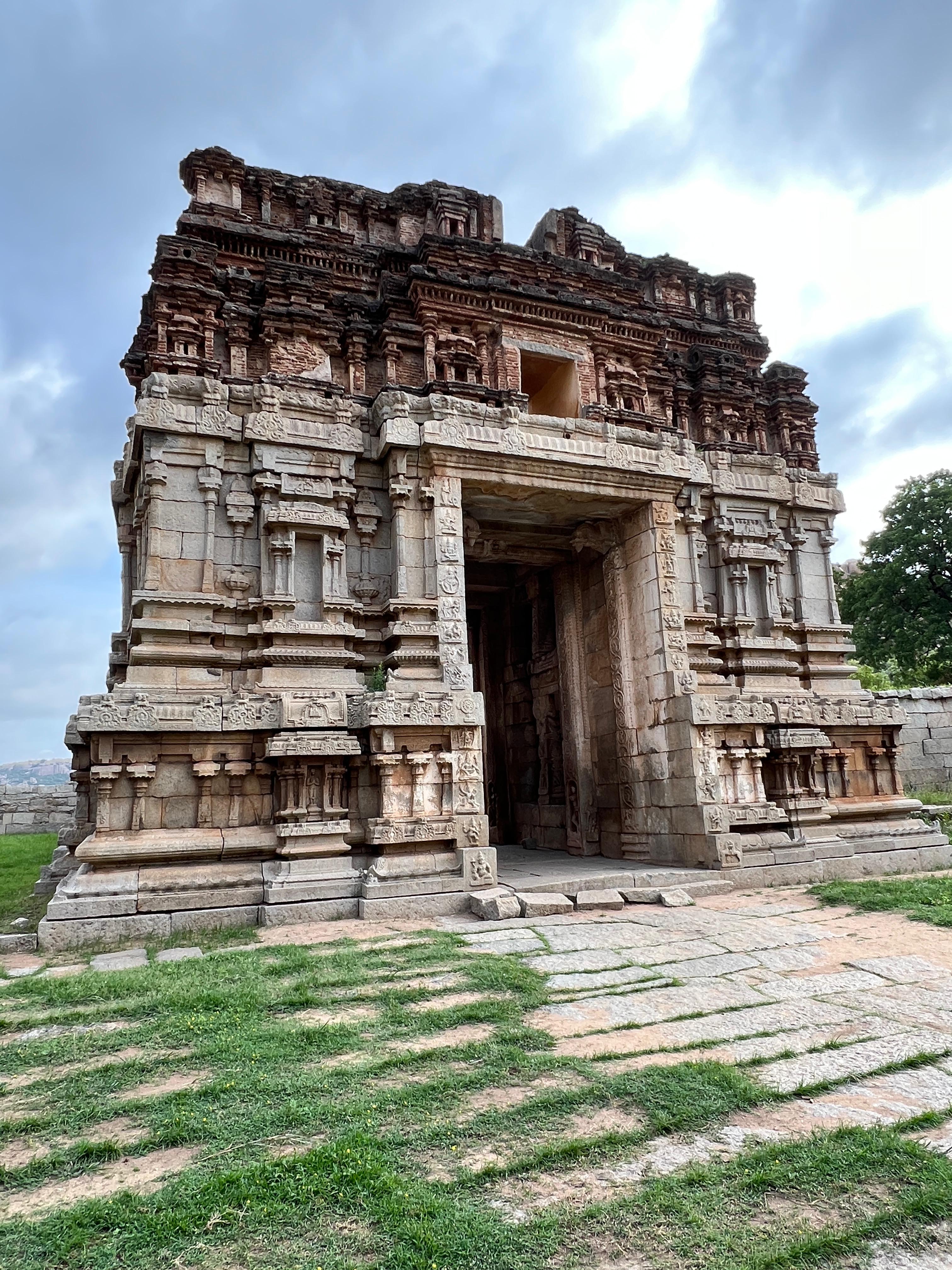
The walking route eventually curves around and takes you alongside the Tungabhadra river before opening back towards the Virupaksha Temple area. We sat near the river for a while and it was really serene and beautiful. Sitting there between the river, enormous rocky hills and all the detailed stone architecture around us was probably one of the most peaceful moments of the trip.
We spent roughly an hour exploring this side before finally entering the Virupaksha Temple at around 9:15 AM. You have to leave your footwear at the stalls outside the temple. There was also an option for a faster darshan for around ₹25 per person when we visited, and they accepted only cash. We didn’t have any change on us, so after asking around for a bit, we managed to get some spare change and headed inside. The temple itself is beautiful and the architecture is really pretty.
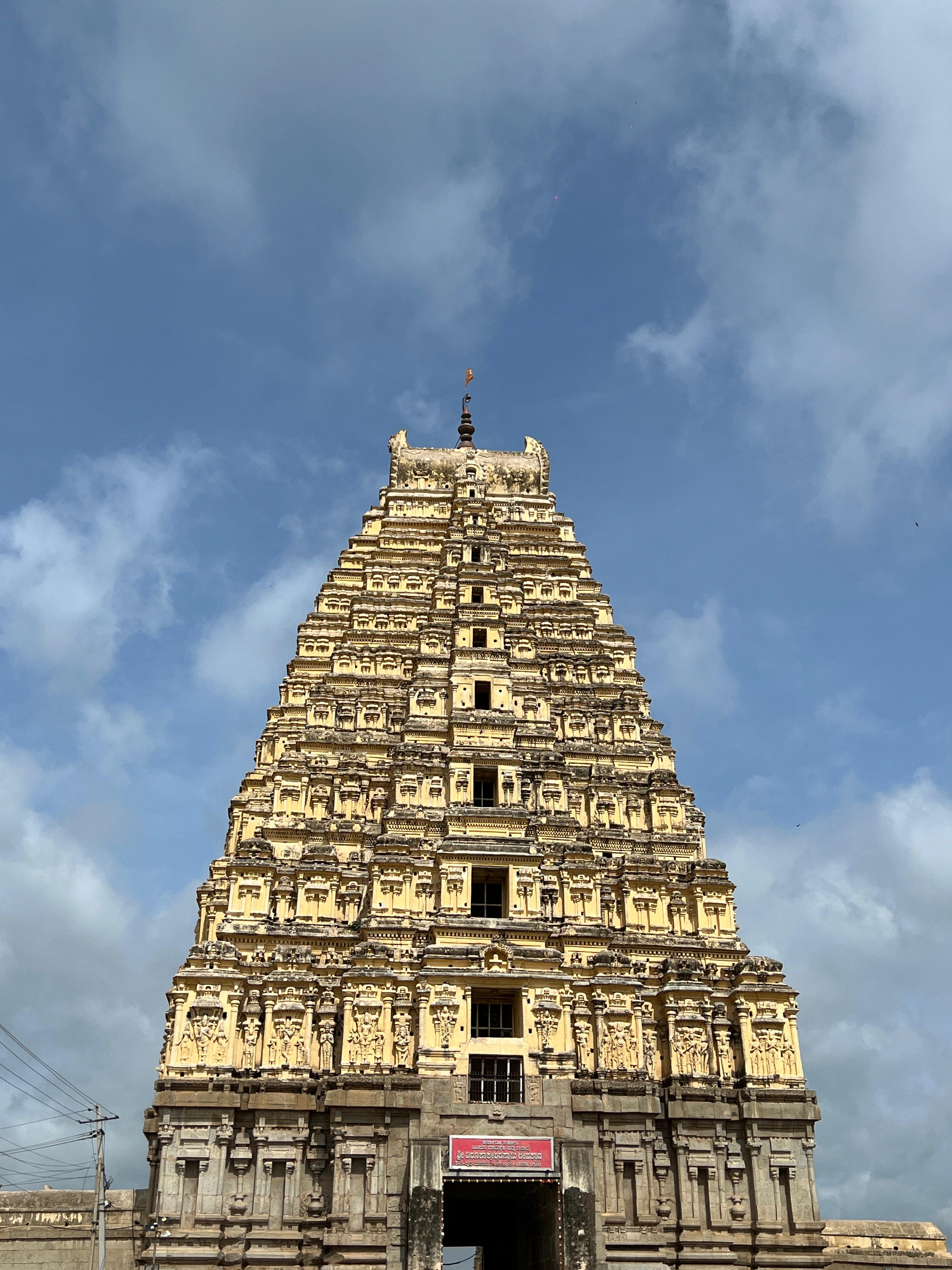
After spending about an hour there, we left for one of Hampi’s most famous landmarks, the Sri Vijaya Vittala Temple. This is where you find the iconic Stone Chariot. After parking your vehicle, there is a small buses arranged by the government that take you towards the main temple complex for a small fee.
The Stone Chariot is probably one of those structures most Indians have already seen without necessarily realising it. It is the monument featured on the reverse side of the ₹50 currency note, so seeing it in person was pretty cool.
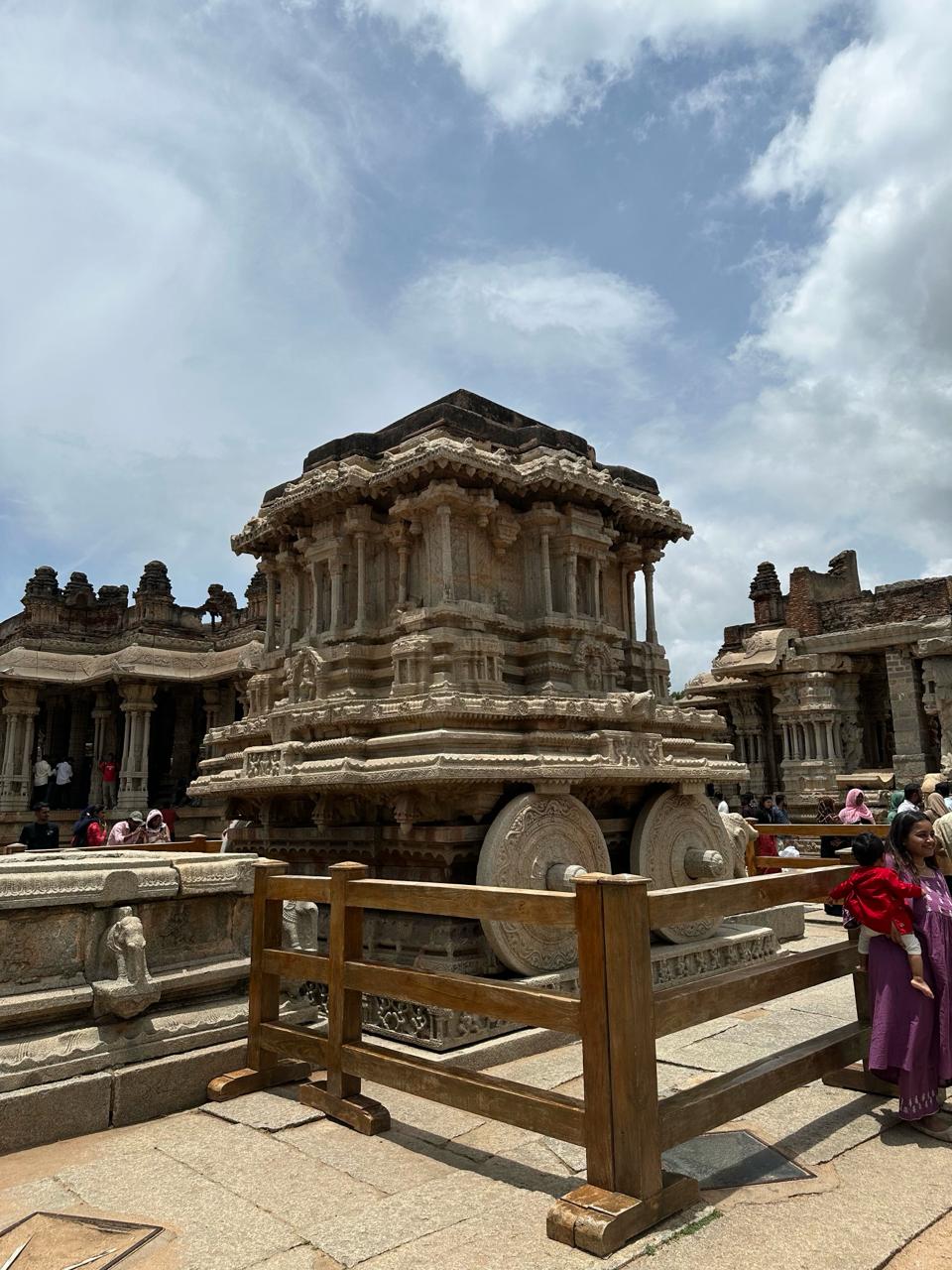
By the time we reached the temple complex it was around noon, and the difference compared to the morning was obvious. There were significantly more people and the sun was starting to get uncomfortable. August was definitely better than visiting during peak summer, but walking around Hampi in the afternoon still gets tiring very quickly because most of these monuments are completely exposed. I would definitely recommend arriving earlier in the morning if you want to avoid both the heat and the crowd.
After all the walking, we were exhausted. We decided to head back to our stay, rest for a couple of hours and continue exploring later. At around 4 PM, we left again, this time towards the Tungabhadra Dam viewpoint.
The water levels were really high when we visited. Standing at the viewpoint, there were actual waves across the reservoir that made parts of it look almost like an ocean. After parking near the entrance, there is roughly a 600 to 700 metre walk towards the viewpoint. We spent some time walking around, enjoying the view and eventually headed back towards Hospet.
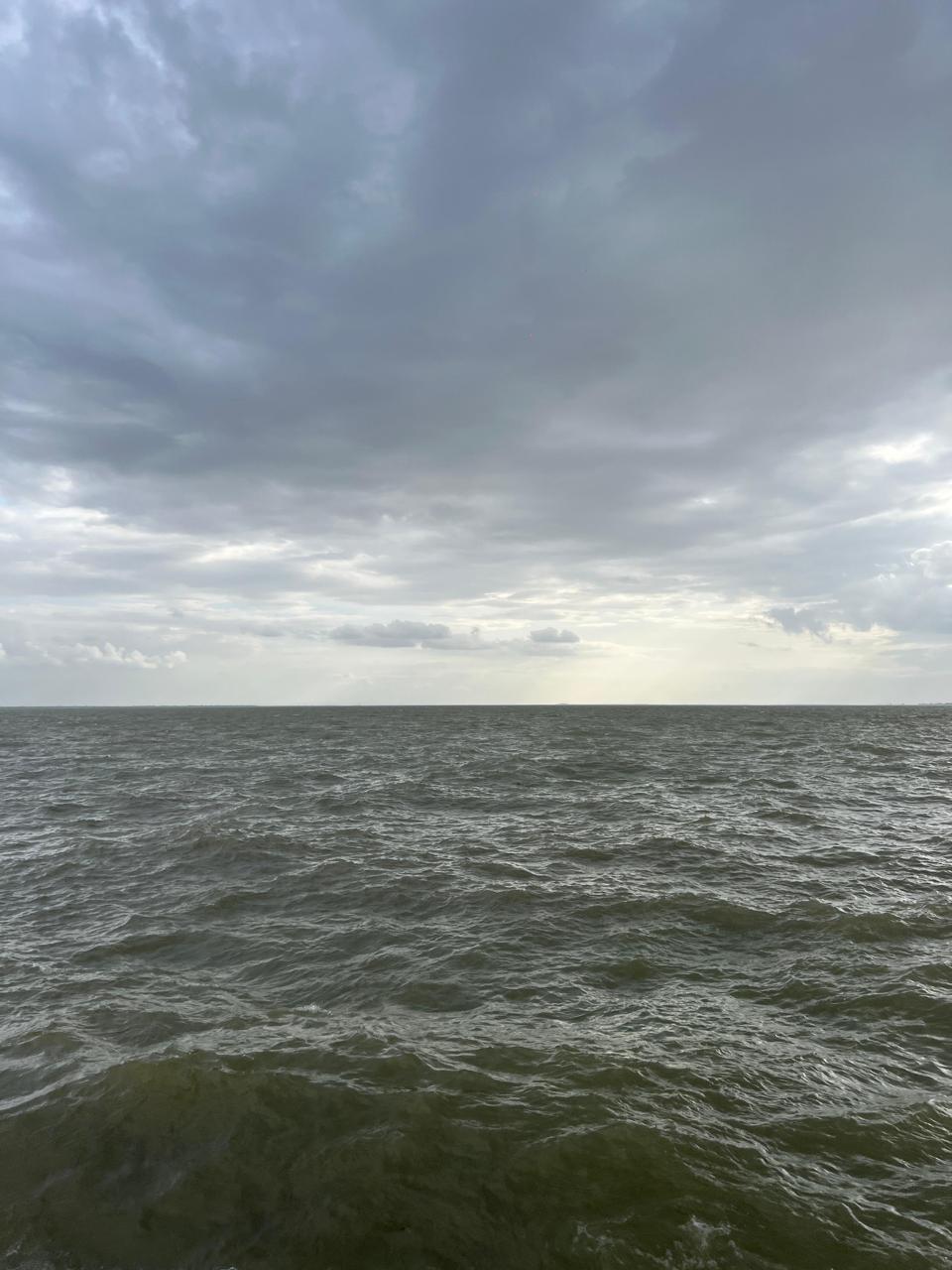
The rest of the evening was slow. We explored whatever was around Hospet, had dinner and called it a day.
Day 3. Exploring Royal Hampi and a riverside ride
Day 3 started a little slower. We left our stay at around 9 AM and found a small South Indian restaurant on an adjacent road. From outside it looked almost like a proper fine-dining restaurant, but we were there for something simple, idli and dosa and their menu was limited to only that in the mornings. After breakfast, we left towards Hampi’s Royal Enclosure.
On the way, we were stopped by the Karnataka traffic police for a routine check. What should have been a quick stop ended up taking around 20 to 30 minutes because my pollution certificate had expired. There was a lot of back and forth over it before they eventually let us continue. It was a bit irritating, but eventually we got going again.
We reached the Royal Enclosure at around 11 AM and started exploring. One of the first things we checked out was the famous stepped tank. Its perfectly symmetrical steps and geometric design make it look completely different from many of the other structures around Hampi.
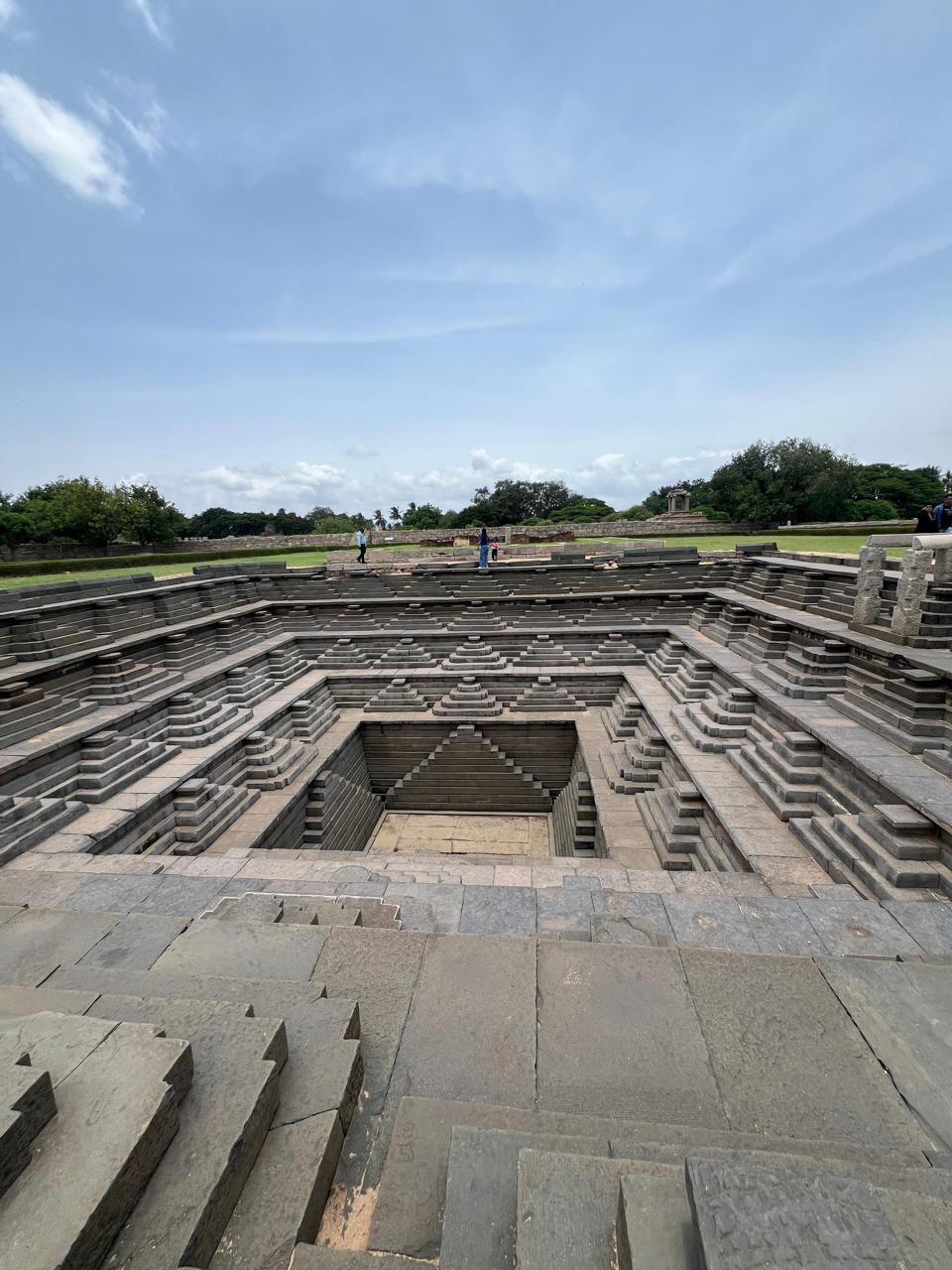
Again, this entire area is mostly open with very little protection from the sun. Visiting early in the morning or later in the afternoon would definitely make exploring it much more comfortable.
From there, we went towards the Mahaanavami Dibba. It is essentially a massive stone platform, but once you get closer you start noticing the details carved into its different layers. There are elephants, horses, soldiers and several other figures carved throughout the structure. The architecture of the place is truly stunning, and there is so much detail in the carvings that you really have to walk closer to appreciate it.
We continued exploring and eventually made our way towards the Lotus Mahal and the Elephant Stables. The garden surrounding this area was one of the nicest places to simply slow down and spend some time.
Nearby are the Elephant Stables, a huge historical structure that was used to house the royal elephants during the Vijayanagara Empire. There are eleven chambers in total, with the central dome being one of the highlights. The architecture here is really impressive, and the massive green lawns surrounding everything make the entire area feel peaceful.
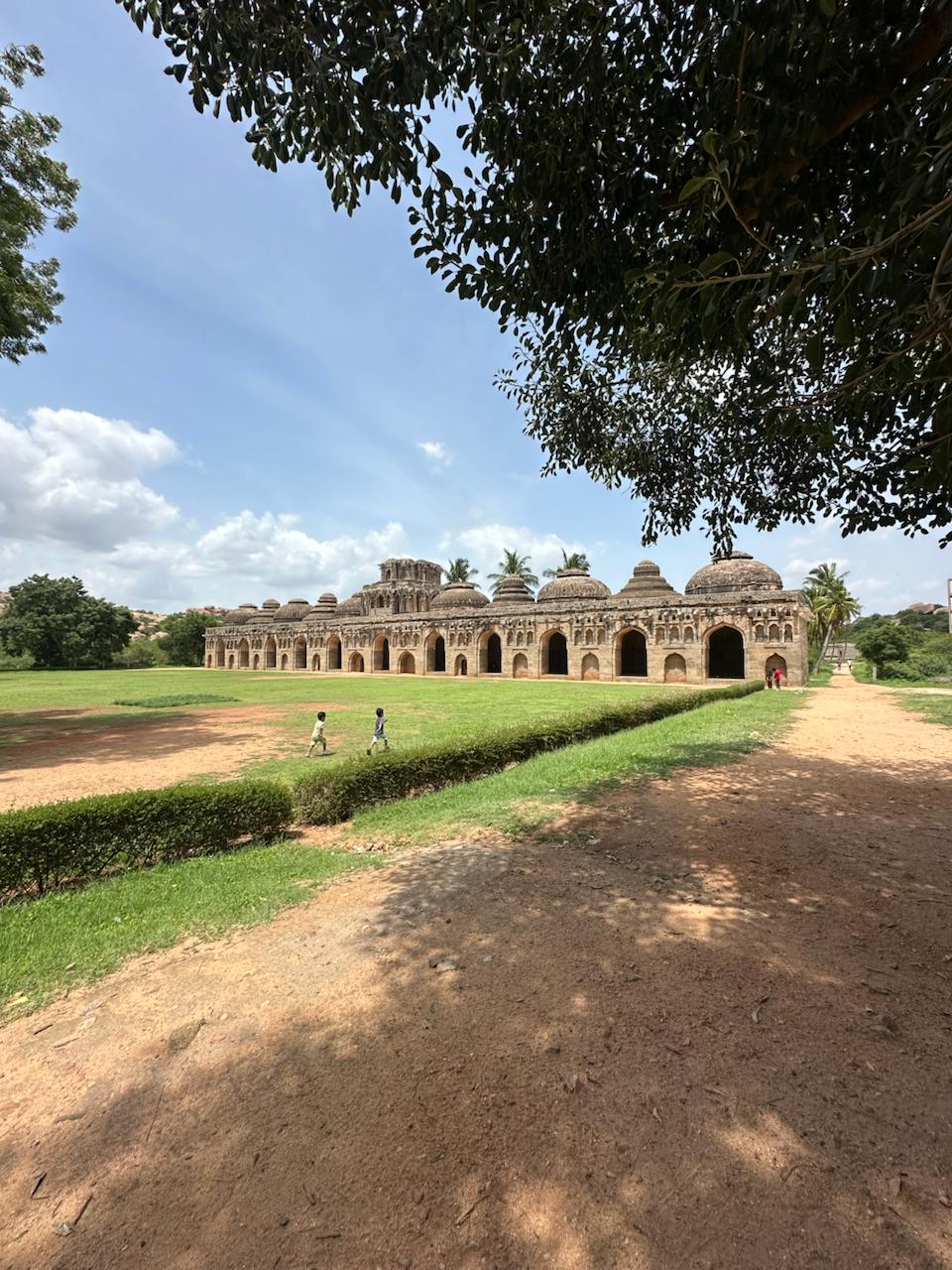
The garden area here is just amazing. You can hang around with your family or friends, take some pictures and slowly walk between the different monuments scattered around the complex.
After all that walking, we desperately needed a washroom break. While looking for a clean restaurant nearby, we stumbled upon a place called Hampi Mango Tree Restaurant. This isn’t the famous, heavily reviewed Mango Tree Restaurant that you’ll probably see recommended everywhere when searching for food in Hampi. We just happened to find this one while looking for a place to stop.
The washrooms were clean, which solved our immediate problem, and we eventually decided to have lunch there too. They had unlimited meals, but neither of us was particularly hungry, so we ordered some rice, curry, curd and papad. It was surprisingly good. Nothing fancy, but it tasted like proper home cooked food, which was exactly what we wanted after spending the morning walking around in the sun.
After lunch, we had to decide what to do with the rest of the day. Travelling to the other side of the river would have taken us more than an hour, and it was already getting late, so we decided to visit the Hampi Zoo instead. We took the bus safari there. After spending two days walking through ruins under the sun, sitting inside a bus and travelling through a massive green environment was actually quite relaxing.
When we reached the parking, I realised I had left the phone I use for navigation on the bike while we went inside the zoo. I couldn’t find it on the bike or in my bag, but luckily a few guys nearby had spotted the phone and were waiting for us to return so they could hand it back. Very kind of them.
We left the zoo at around 6 PM, we started riding back along the Tungabhadra river, and this might have been one of the best rides of the entire trip. It was around sunset, the temperature had cooled down, and we were riding alongside the river with the landscape around us. There were a few rough patches along this road, but I’d say around 95% of it was properly constructed and comfortable to ride on.
Exploring Hampi on a motorcycle was really enjoyable. You can move between the monuments easily, take some of the smaller roads through the countryside and suddenly find yourself riding alongside the Tungabhadra with rocky hills in the distance.
We eventually reached our stay and rested for a while. Later that evening, Ruchita wanted to buy a few things, so we rode back towards Hampi and walked around the local market. She picked up some stuff for herself, and after wandering around for a bit, we headed back to Hospet. We had dinner and crashed for the night.
Day 4. Hospet to Bengaluru
Day 4 started much earlier than the others. This was our day to head back home, and as much as neither of us wanted this peaceful little getaway to end, we had a long ride back to Bengaluru waiting for us.
We left at around 5:30 AM. Our goal was to reach Bengaluru before late afternoon, ideally before 3 PM. The roads were almost empty at that hour, and after riding for around an hour we took our first fuel break. We continued for another hour and a half or so before stopping near Chitradurga for breakfast at Paakashala.
After breakfast, we got back onto the highway and continued towards Bengaluru. We rode for another hour or so before stopping somewhere near Tumakuru at Ghar Ka Khana inside a Jio-bp petrol bunk for lunch. The food was good, but by this point we were mostly just looking forward to getting home.
Unlike our ride towards Hampi, the return journey felt hot and tiring. The sun was out, we had already spent several hours on the motorcycle, and there wasn’t much motivation left to stop anywhere unnecessarily. So we just kept riding and finally reached Bengaluru at around 2:30 PM.
Four days of riding, walking through centuries-old ruins, exploring temples, sitting beside the Tungabhadra river, riding through sunflower fields, almost losing a phone, and somehow managing to cover most of what we wanted to see.
Hampi was different from most of our other trips. It wasn’t really about reaching one particular destination or seeing one spectacular viewpoint. The entire place is something you slowly explore. You ride a few kilometres, park somewhere, walk through a set of ruins, get back onto the bike and find another monument somewhere nearby. There is history almost everywhere you look, mixed in with rocky landscapes, green fields and the Tungabhadra river.
Four days felt like a good amount of time for our trip, but there was still a lot we didn’t get to explore. I wouldn’t mind coming back someday, especially to explore the other side of the river and some of the places we had to skip this time.
Stay and food details
Here are the stay and restaurant details from the trip.
Stay
- Pai Residency - [Decent place that costed 2k/night]
Restaurants and food stops
- A2B, Sira - afternoon break on the way to Hospet
- Kailash Parbat, Hospet - dinner on Day 1
- Hotel Swathi - breakfast on Day 3
- Hampi Mango Tree Restaurant - simple rice, curry, curd and papad for lunch
- Paakashala, Chitradurga - breakfast during the return journey
- Ghar Ka Khana, Jio-bp - lunch near Tumakuru on the way back to Bengaluru